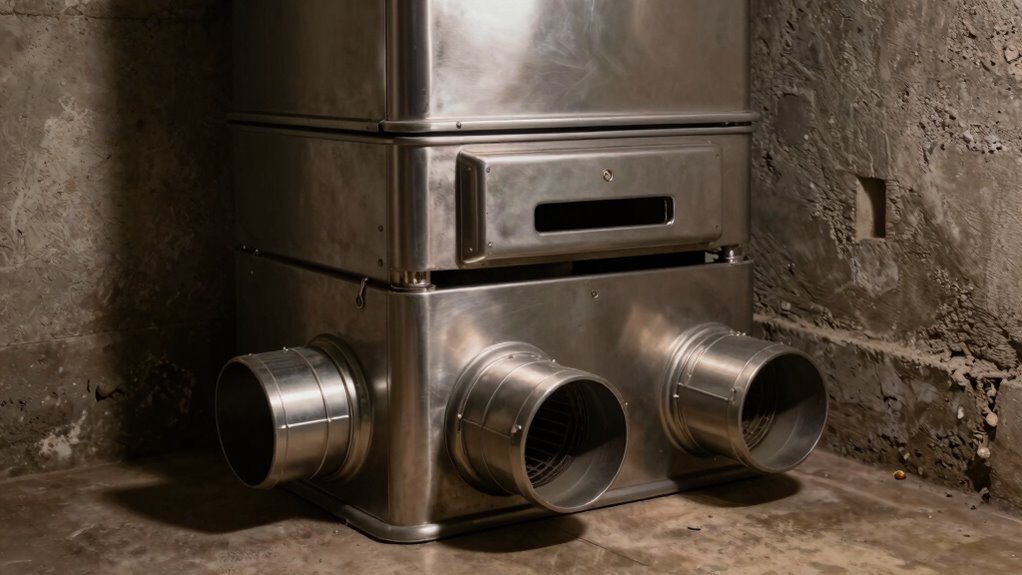

Proper airflow planning is essential when installing a basement stove because it guarantees safe operation and prevents dangerous issues like poor combustion and gas buildup. Good ventilation helps maintain a healthy indoor environment and keeps the stove functioning efficiently over time. Without proper design, you risk carbon monoxide accumulation, legal violations, and potential fire hazards. Investing in proper airflow setup protects you and your home. Stay with us to discover how to make sure your system meets all safety standards.
Key Takeaways
- Proper airflow prevents dangerous gas buildup and ensures safe combustion of basement stoves.
- Adequate ventilation reduces the risk of carbon monoxide poisoning.
- Strategic vent placement promotes consistent air circulation and prevents stale air accumulation.
- Compliance with safety regulations requires optimized airflow to avoid legal and insurance issues.
- Regular maintenance of airflow systems prolongs stove life and maintains safe, efficient operation.
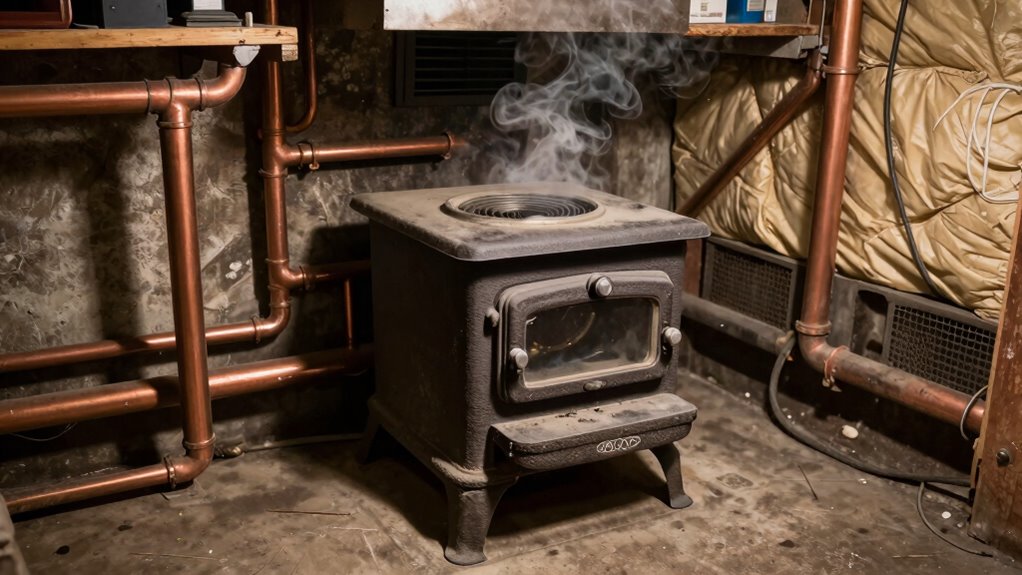
Have you ever wondered how to guarantee your basement stove operates safely and efficiently? Proper airflow planning is essential, especially when installing a stove in a basement. Without it, you risk creating dangerous conditions, such as poor combustion, buildup of harmful gases, or even fire hazards. A well-designed ventilation system ensures that fresh air flows into the space while exhaust gases exit safely, maintaining a healthy environment. Following safety regulations is critical here; these guidelines specify minimum airflow requirements, proper vent placement, and necessary safety features to prevent dangerous situations. Failing to adhere to these regulations can lead to serious consequences, including carbon monoxide buildup, which is odorless and deadly. That’s why understanding and implementing an effective airflow plan is fundamental for your safety and the longevity of your stove.
When planning your basement stove installation, you should consider the size and layout of the space. A larger or more enclosed basement may require a more complex ventilation system to guarantee adequate airflow. You need to account for air intake and exhaust points, making sure they’re positioned to promote consistent circulation. This prevents stale air from lingering and reduces the risk of gas buildup. Proper vent placement also helps prevent backdrafts, which can force dangerous gases back into your living space. It’s important to choose vents that meet safety standards, designed specifically to handle the heat and gases generated by your stove. Installing a high-quality exhaust system that connects to the outside minimizes the risk of indoor contamination and complies with safety regulations. Additionally, understanding airflow requirements can help you optimize your ventilation setup for safety and efficiency. Proper ventilation design is crucial for preventing the accumulation of microplastics and other pollutants in indoor environments. Ensuring that your ventilation system is properly maintained will also help prevent clogs and damage, prolonging its effective operation.
You should also be mindful of local building codes and safety standards, which often specify the required airflow rates and vent configurations. These regulations are in place to protect you and your family from hazardous conditions. Failing to follow them could void insurance policies or lead to legal issues. It’s best to consult with professionals who understand these requirements, so you can be confident that your airflow plan is both effective and compliant. Remember, a good ventilation system isn’t just about meeting regulations—it’s about creating a safe, healthy environment where your basement stove can operate reliably without posing risks. Proper airflow planning might seem complex, but investing time and effort into it pays off by preventing potential disasters. Ultimately, your goal should be to guarantee that every aspect of your stove’s airflow setup promotes safety, efficiency, and peace of mind.
As an affiliate, we earn on qualifying purchases.
Frequently Asked Questions
How Does Poor Airflow Affect Stove Safety?
Poor airflow can make your stove unsafe by trapping dangerous gases, which affects indoor air quality. When airflow is restricted, carbon monoxide and other fumes can build up, posing health risks and increasing the chance of explosions. Additionally, inadequate ventilation hampers mold prevention, leading to moisture buildup and potential health issues. Ensuring proper airflow keeps the air clean, safe, and mold-free, protecting both your home and your family’s health.
Can Ventilation Improve Stove Efficiency?
Ventilation can definitely improve your stove’s efficiency by enhancing air quality and ensuring proper airflow. When your ventilation design is effective, it supplies fresh air for combustion and removes harmful gases, which helps the stove operate more smoothly. Good airflow prevents dangerous buildup, optimizes fuel use, and maintains consistent heat. So, investing in proper ventilation design isn’t just about safety—it also makes your stove run better and more efficiently.
What Are Common Airflow Issues in Basements?
Airflow issues in basements are like traffic jams, causing poor ventilation and inefficiency. Common problems include stagnant air from insufficient basement ventilation, misconceptions about airtight sealing, and blocked vents. These issues hinder proper airflow, leading to dangerous buildup of fumes or moisture. To fix this, you need to guarantee clear, unobstructed pathways for air and avoid misconceptions that sealing tight always improves safety. Proper airflow planning keeps your basement safe and well-ventilated.
Is Passive Airflow Sufficient for Basement Stoves?
Passive airflow isn’t usually enough for basement stoves due to ventilation myths that suggest natural movement keeps air safe. You need active ventilation systems to guarantee proper airflow, preventing dangerous buildup of fumes or carbon monoxide. Relying solely on passive airflow can be risky, as it may not provide consistent, adequate ventilation. Proper planning, including fans and vents, is essential for safety and to avoid common airflow issues in basements.
How Often Should Airflow Systems Be Inspected?
You should inspect your airflow system at least once a year to guarantee safety and efficiency. Regular checks help confirm that air filters are clean and duct sealing is intact, preventing leaks that can reduce airflow and cause buildup of dangerous gases. Keep in mind, neglecting these inspections can compromise your stove’s performance and safety, so stay proactive—maintain your air filter and seal ducts to keep airflow ideal and safe.
As an affiliate, we earn on qualifying purchases.
Conclusion
Think of your basement stove as the heart of your space—its airflow as the veins that keep it alive. When you plan airflow carefully, you’re ensuring the lifeblood flows freely, preventing stagnation and danger. Neglect this, and you risk a shadowed chamber where safety and warmth falter. Remember, a well-designed airflow is like a steady heartbeat, sustaining comfort and safety in your home’s hidden depths. Without it, even the brightest flame can flicker out.
carbon monoxide detector for basement
As an affiliate, we earn on qualifying purchases.
As an affiliate, we earn on qualifying purchases.
As an affiliate, we earn on qualifying purchases.